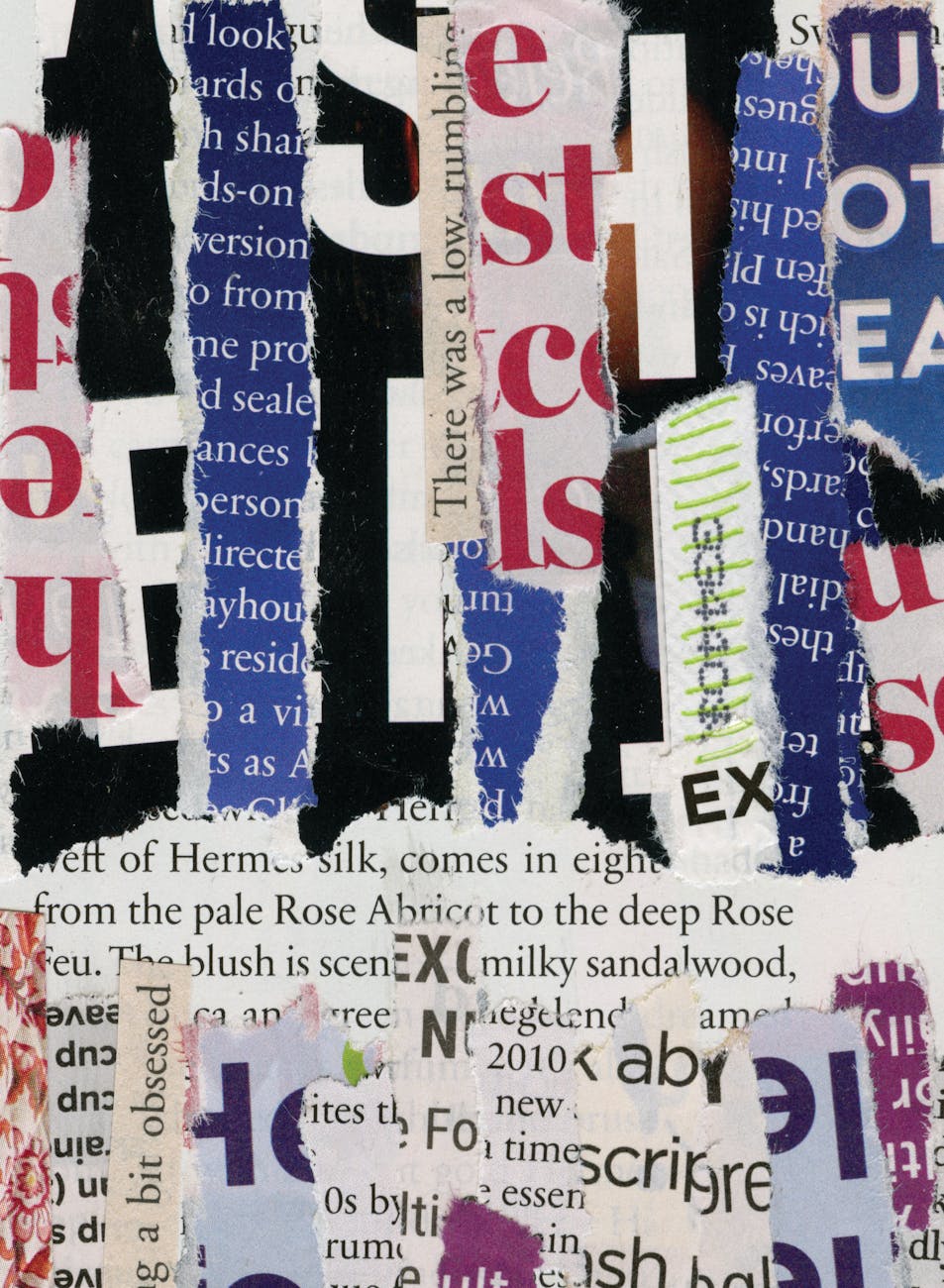
One thing I love about poetry is the freedom to experiment with language – the meanings, structure and sounds of words. Using found poetry as a form can lead to witty, insightful, playful or serious poems that could surprise you.
I first came across found poetry by accident. At the time I didn’t know that experimenting with rearranging words from different poems and pieces of writing I had done and discovered was a well recognized poetry form. Since then I often use this technique as a way to get the creative juices flowing when I first sit down to write and am staring at a blank page. It is a great way to free yourself from the formality of writing and discover new ways to play around with word definitions, double entendre, line breaks and visual poetry.
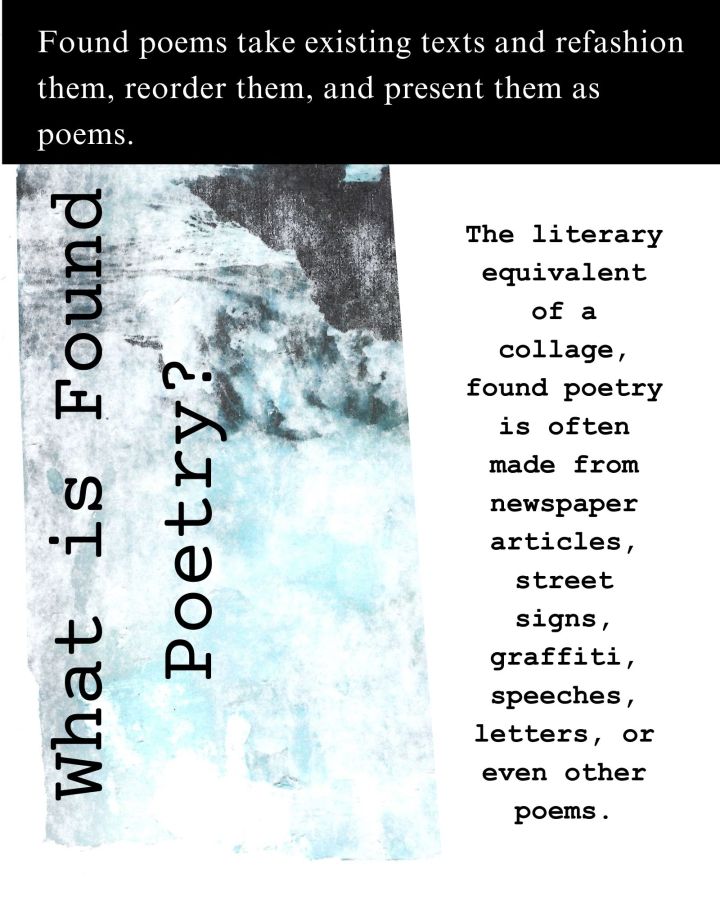
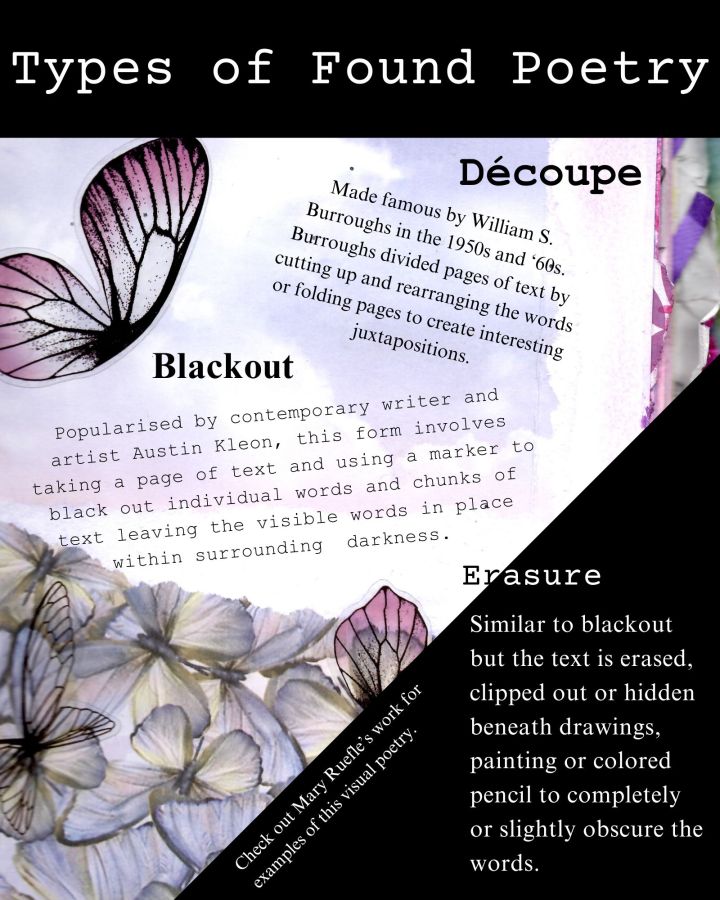
In this post I give you a quick insight into found poetry with some examples of well known poets as well as some of my own experiments.
Examples of Found Poetry
This poem by William S. Burroughs was constructed using words lifted from two widely different articles from a newspaper.
Formed In The Stance
The beautiful disease and
The government falls
along the weed rooms
flesh along the weed government/ / / /
The girls eat morning
Dying peoples to a white bone monkey
in the Winter sun
touching tree of the house. $$$$
Argue second time around such a deal.
The middle artist unknown and probably hostile
in his hands scouting be obligation
for force main body dependant
on in from ate………
The usual procedure
viruses graphed
Time.
Ours THAT????
HER feet at?
Morning
the thunderous
read the front page” ” ” ”
star blazing
but She
read the stories
beyond lines. . . .
They can
take over
viruses &&&
make one
The Scientists
formed in the stance. . .
traits
ride
many. . .
thorough
equipped
street
few days:::
Cut up Paris Herald Tribune articles on Met performance and polio virus
Burroughs poem
New Clues To Cancer Cure
SATURDAY EVENING POST Oct. 31, 1959
Sourced from www.realitystudio.org
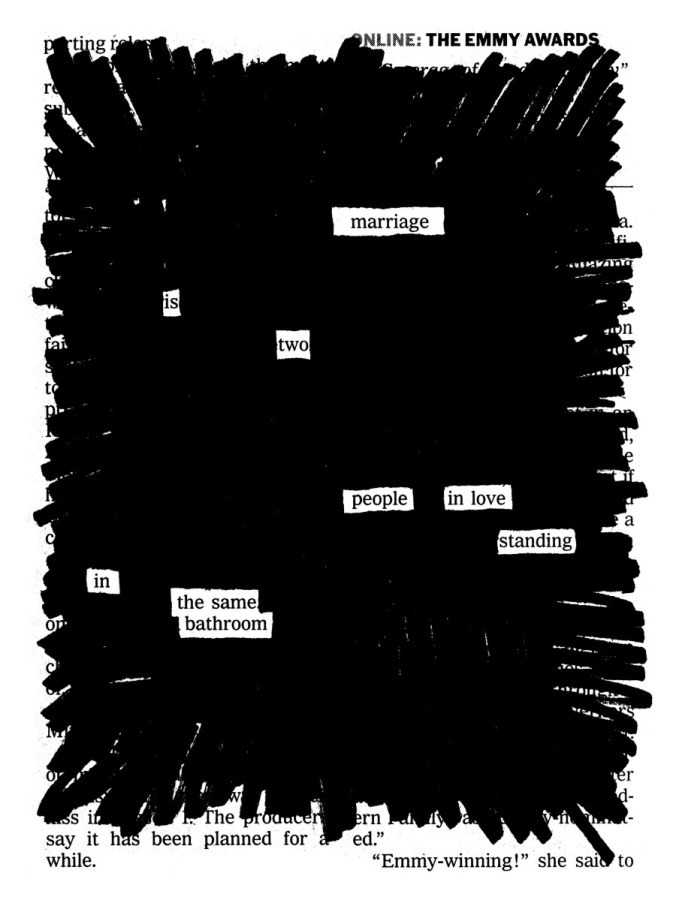
In Austin Kleon’s blackout poem What Is Marriage? chunks of text disappear behind a black marker, only leaving behind a few choice words floating in a sea of darkness.
Check out Mary Ruefle’s book Melody where she turned the entire book into an erasure poem. She says of her work process:
“I don’t consider the pages to be poems, but I do think of them as poetry, especially in sequence and taken as a whole; when I finish an erasure book I feel I have written a book of poetry without a single poem in it, and that appeals to me…
The books have been called ‘found poems,’ but I don’t consider them as such. A found poem is a text found in the world, taken out of its worldly context and labeled a poem. I certainly didn’t ‘find’ any of these pages, I made them in my head, just as I do my other work. In the erasures I can only choose words out of all the words on a given page, while writing regularly I can choose from all the words in existence. In that sense, the erasures are like a ‘form’–I am restricted by certain rules…”
Constructing your own found poems
First collect the text or texts you want to use then decide what type of found poem you are going to create. For example, if you want to do a blackout poem, you may only require one page of text and a pen whereas a découpe poem would require multiple texts from various sources such as a newspaper, photocopies of a dictionary or medical journal and a pair of scissors, glue and a blank page to rearrange the words. You could also try both techniques digitally using software like Canva to cut and paste words and images.
Below I created a series of découpe poems constructed as a collage using stickers, hand drawing, various layers of textured paper, paint, glitter and found images transferred onto the paper using gesso.
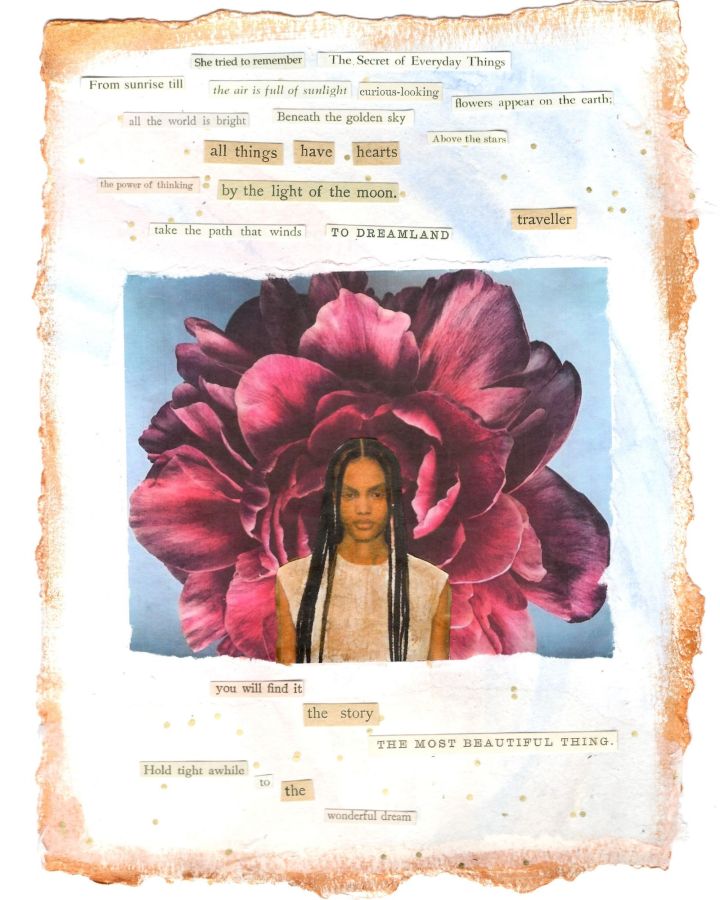
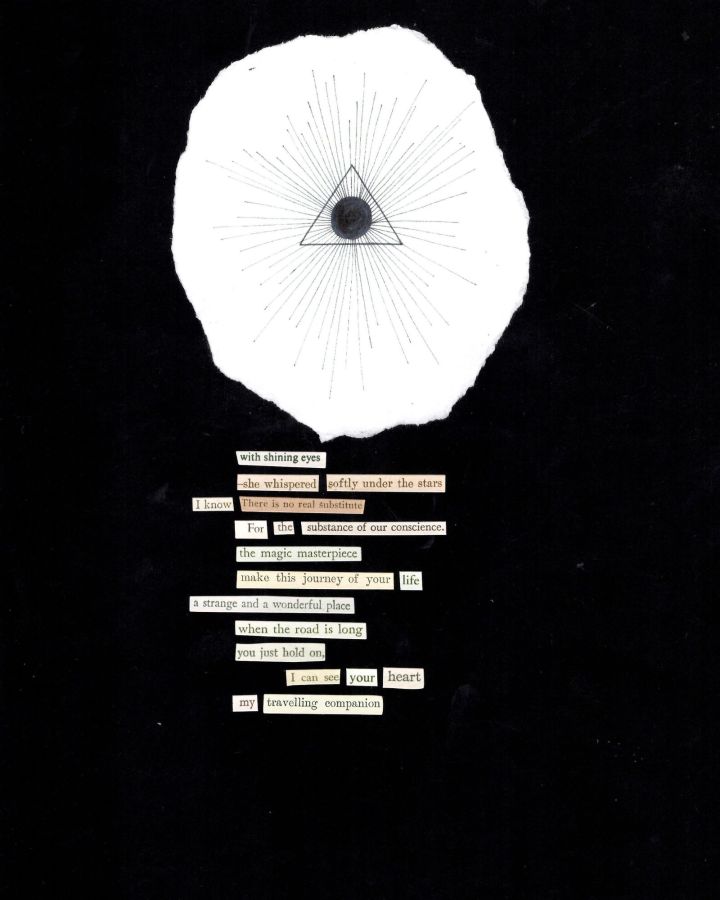
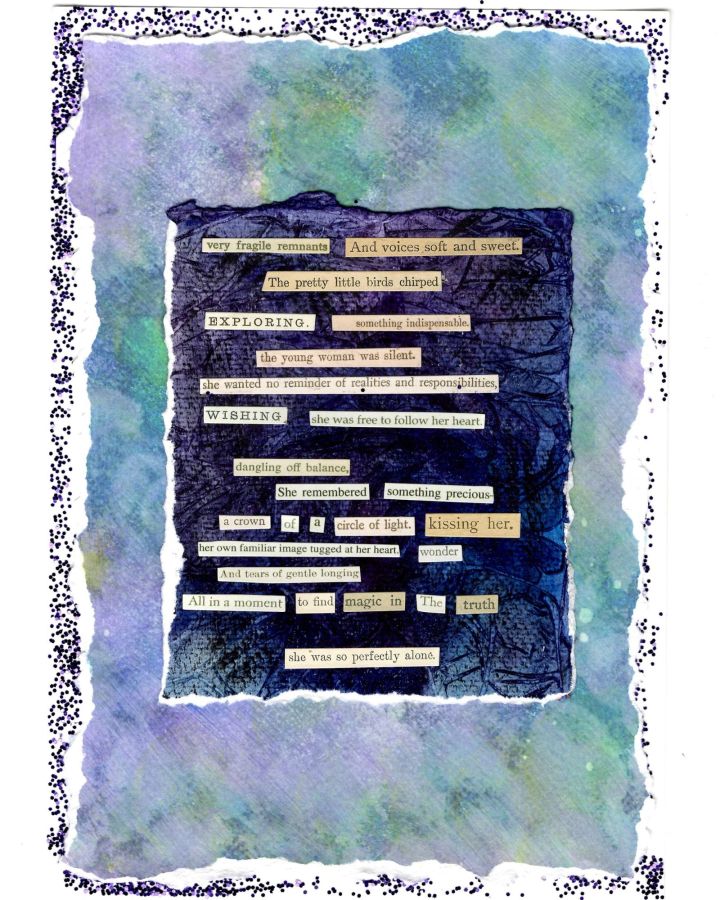
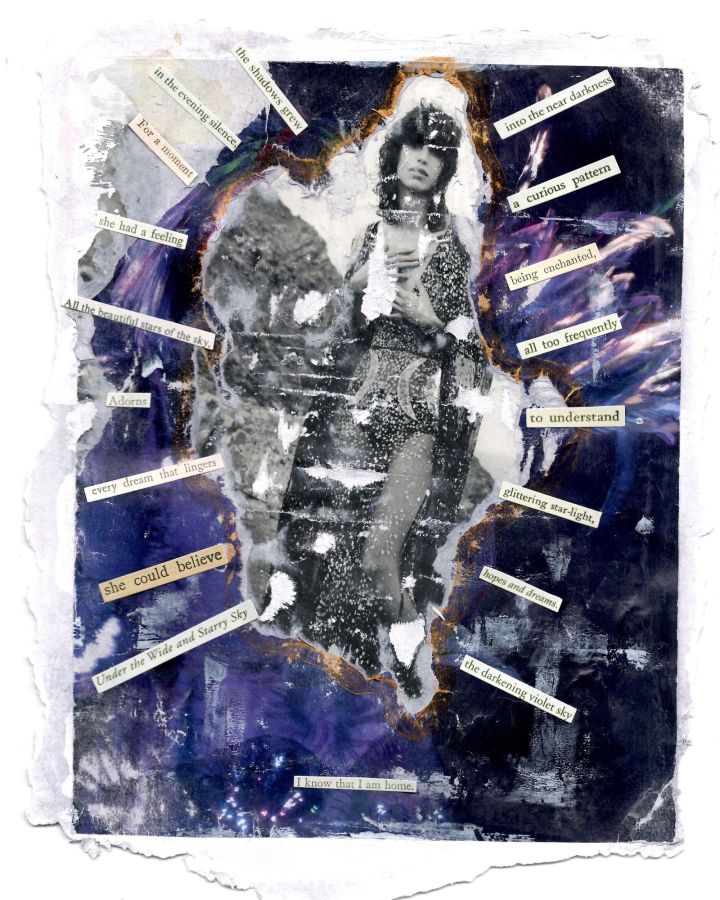
Like creating a collage or a puzzle, piecing together a found poem is incredibly meditative.
If you enjoyed this post check out:
- Mary Ruefle’s illustrated erasure poem Melody.
- More of Austin Kleon’s work at www.austinkleon.com
Also see my poem ‘The Wheel of Life’ in my book There Is Nothing Between These Atoms. This was a found poem I constructed using text from a local magazine, journal entries and a book on how to play the guitar!
Featured image by Heather Green on Pexels.com

 CHERONE BELLINFANTIE
Leave a comment