Book Review
God Makes The Rivers To Flow: An Anthology of The World’s Sacred Poetry & Prose by Eknath Easwaran
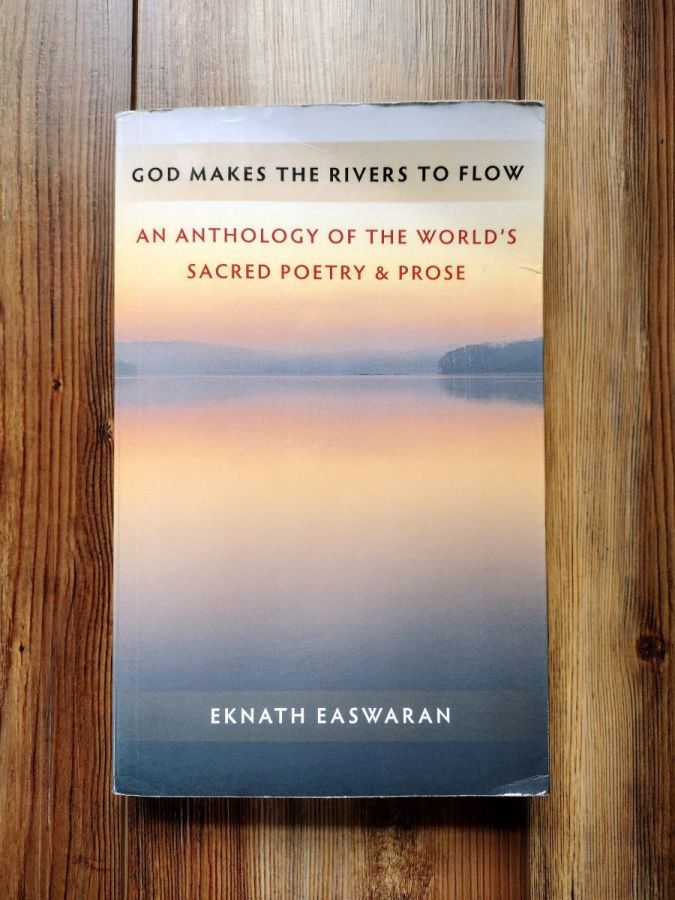
As a frequent visitor to the local library I always have a peek at the bookshop before I leave, especially the shelf titled ‘free.’ Most of the time there are only vintage almanacs and thick outdated encyclopedias but this time I found a jewel between the yellowed pages of old Readers Digest magazines. I often open this book to a random page first thing in the morning with a cup of lovely English tea. My mind finds its focus on the wisdom of the Bible, the Bhagavad Gita, Lao Tzu, Kabir. The day ahead becomes something magical, mystical and sacred.
What is the book about?
God Makes the Rivers to Flow is a collection of poetry and prose from various scriptures, saints, philosophers and poets around the world, curated by Indian spiritual teacher Eknath Easwaran (1910-1999). Easwaran was a teacher of English Literature in India before he traveled to the USA in 1959 to teach university students about Indian spirituality. He has published many books on spiritual living and meditation including translations of the Bhagavad Gita and Upanishads. He founded the Blue Mountain Center of Meditation in California where his eight point system of passage meditation outlined in many of his books continues to be taught to hundreds of people from around the world. This eight point system, listed below, is explained in God Makes the Rivers to Flow so that you can immediately put it into practice with the text.
- Meditation on a passage
- Repetition of a mantram
- Slowing down
- One pointed attention
- Training the senses
- Putting others first
- Spiritual fellowship
- Spiritual reading
Layout and Readability
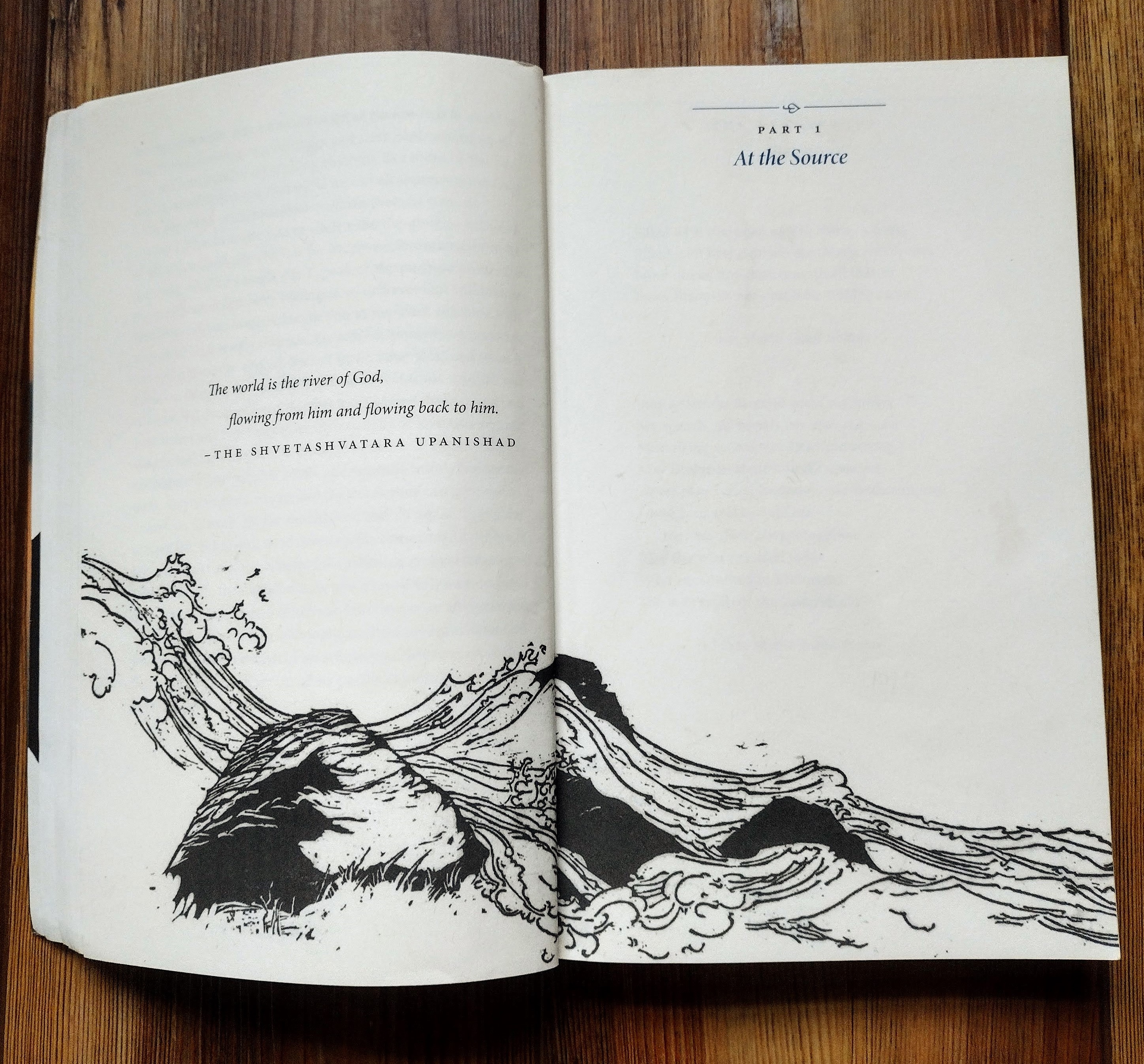
God Makes the Rivers to Flow is divided into three parts: At the Source, Deep Currents and Joining the Sea. This water theme alludes to the fluid channel of communication between God and the devotee as well as the journey of life being much like the flowing of a river or the deep darkness of the ocean. Each section has a simple illustration reminiscent of a Japanese woodcut print partnered with a quote referencing water that serves as a window to the forthcoming passages.
The world is a river of God,
– The Shvetashvatara Upanishad
flowing from him and flowing back to him.
In addition to the beautiful selections of text, Easwaran also provides a short biography of each writer and suggestions for specific uses of the passages. This allows you to expand your knowledge of spiritual texts and mystics as Easwaran not only gives context about the passage but notes the sources of the passages for further research or study. The suggestions for specific uses acts as a quick reference guide for key areas of life to develop or transcend such as Passages for Particular Stages of Life or Passages for Changing Negative Patterns of Thinking. There is also a glossary at the back to help you make sense of Sanskrit words found in the passages.
Conclusion
Overall this is a wonderful handbook for the practice of meditation and self-inquiry. It illustrates the unified message of transcending the ego and connecting deeply to God that is ultimately found in all the world religions. The font is a size that makes it easy for the reader to glance over the words and memorize passages for ongoing contemplation. Every great mystic knows that contemplation on a Higher Power and the wisdom in the words of scripture brings you closer to your divine self.
Here is an excerpt from one of my favorite passages. Enjoy!
The Razor's Edge
from The Katha Upanishad
In the secret cave of the heart, two are

Seated by life's fountain. The separate ego

Drinks of the sweet and bitter stuff,

Liking the sweet, disliking the bitter,

While the supreme Self drinks sweet and bitter

Neither liking this nor disliking that.

The ego gropes in darkness, while the Self

Lives in light. So declare the illumined sages,

And the householders who worship

The sacred fire in the name of the Lord.

May we light the fire of Nachiketa

That burns out the ego, and enables us

To pass from fearful fragmentation

To fearless fullness in the changeless Whole.

Know the Self as lord of the chariot,

The body as the chariot itself,

The discriminating intellect as

The charioteer, and the mind as the reins.

The senses, say the wise, are the horses;

Selfish desires are the roads they travel.

When the Self is confused with the body,

Mind, and senses, they point out, it seems

To enjoy pleasure and suffer sorrow.

When a person lacks discrimination

And his mind is undisciplined, his senses

Run hither and thither like wild horses.

But they obey the rein like trained horses

When a person has discrimination

And the mind is one-pointed. Those who lack

Discrimination, with little control

Over their thoughts and far from pure,

Reach not the pure state of immortality

But wander from death to death; while those

Who have discrimination, with a still mind

And a pure heart, reach journey's end,

Never again to fall into the jaws of death.

With a discriminating intellect

As charioteer, a well-trained mind as reins,

They attain the supreme goal of life,

To be united with the Lord of Love.
Featured image by Jose Luis Sanchez

 CHERONE BELLINFANTIE
Leave a comment